Mike Tyson and Riddick Bowe sat in the same sixth-grade class at P.S. 396 and barely knew each other. Within six years of each other they both held the heavyweight championship of the world. Two roads out of the same few blocks of Brooklyn.
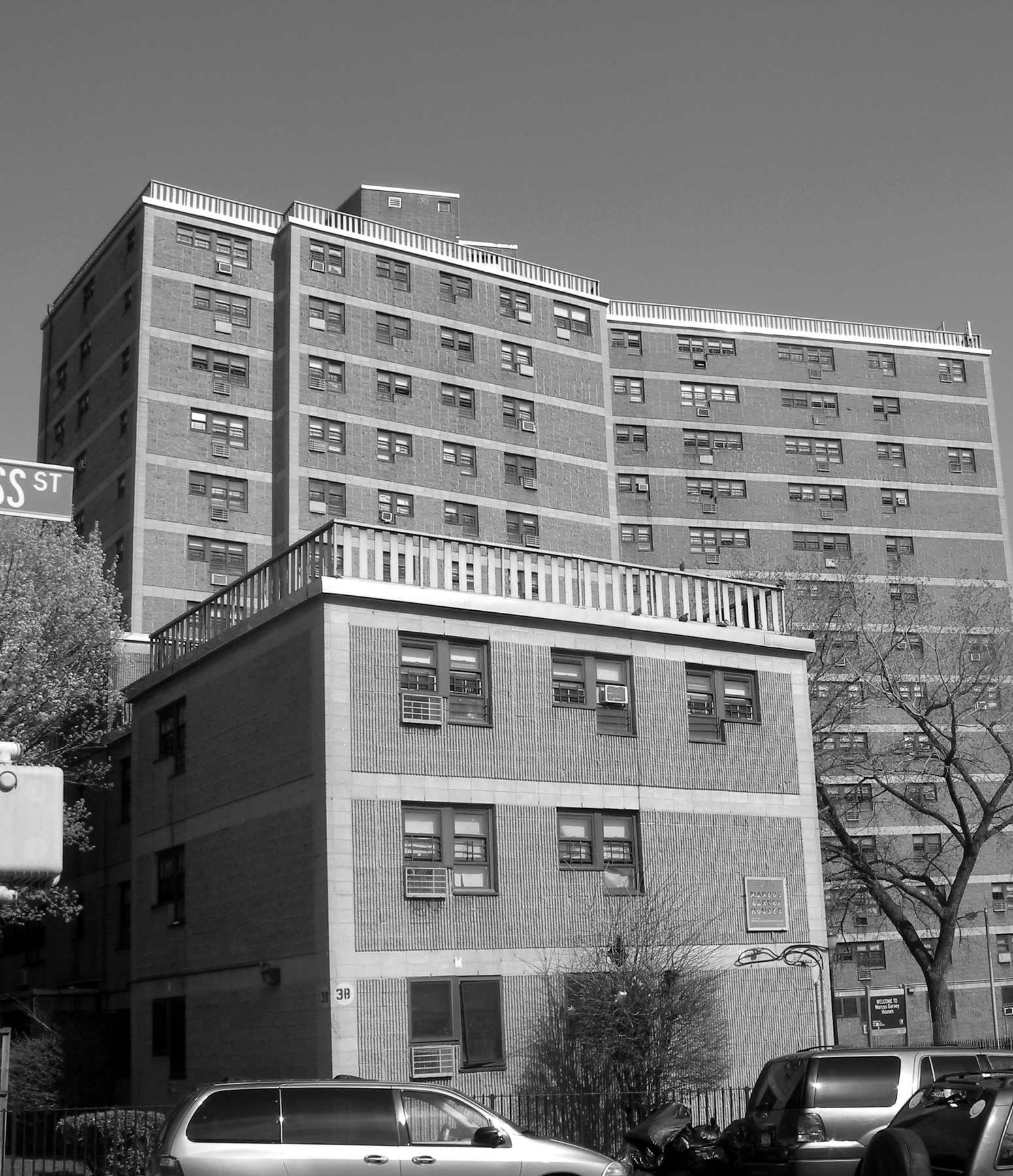
Riddick Bowe remembered it plainly. "We went to school together in the sixth grade in P.S. 396," he said of Mike Tyson. "I really didn't know him." Brownsville is a small neighborhood in eastern Brooklyn, and in the late 1970s it produced, out of one elementary school classroom, two future heavyweight champions of the world who took almost opposite routes to the title.
Tyson: north, to the Catskills
Tyson was born on June 30, 1966, at Cumberland Hospital in Fort Greene. His family lived in Bedford-Stuyvesant until money got tight and they moved to Brownsville when he was ten. He was in trouble with the law as a boy, and he was eventually sent upstate to the Tryon School for Boys in Johnstown, New York.
At Tryon a counselor named Bobby Stewart, a former Golden Gloves champion, noticed that the boy could bench-press more than his own weight. Through Stewart, Tyson met Cus D'Amato, who worked out of Catskill, a river town in the Hudson Valley.
D'Amato had trained Floyd Patterson and José Torres to world titles, then gone quiet. He ran a gym called the Catskill Boxing Club and lived in a big house with Camille Ewald, his companion of many years, who let it serve as a kind of halfway house for the young men D'Amato took in. Tyson moved in. When his mother died, when he was sixteen, D'Amato became his legal guardian.
He won gold at the Junior Olympics in 1981 and 1982. He turned professional on March 6, 1985, in Albany. D'Amato died that November, at 77. On November 22, 1986, Tyson stopped Trevor Berbick in the second round for the WBC heavyweight title. He was twenty years and four months old, the youngest heavyweight champion in history.
What followed has been written about at enormous length, including his conviction in Indiana in 1992 for rape, for which he served three years. This is not that story. This is about where he started. The road out of Brownsville, in his case, ran north, through a reform school and into a river town, and it depended almost entirely on two men who decided to pay attention.
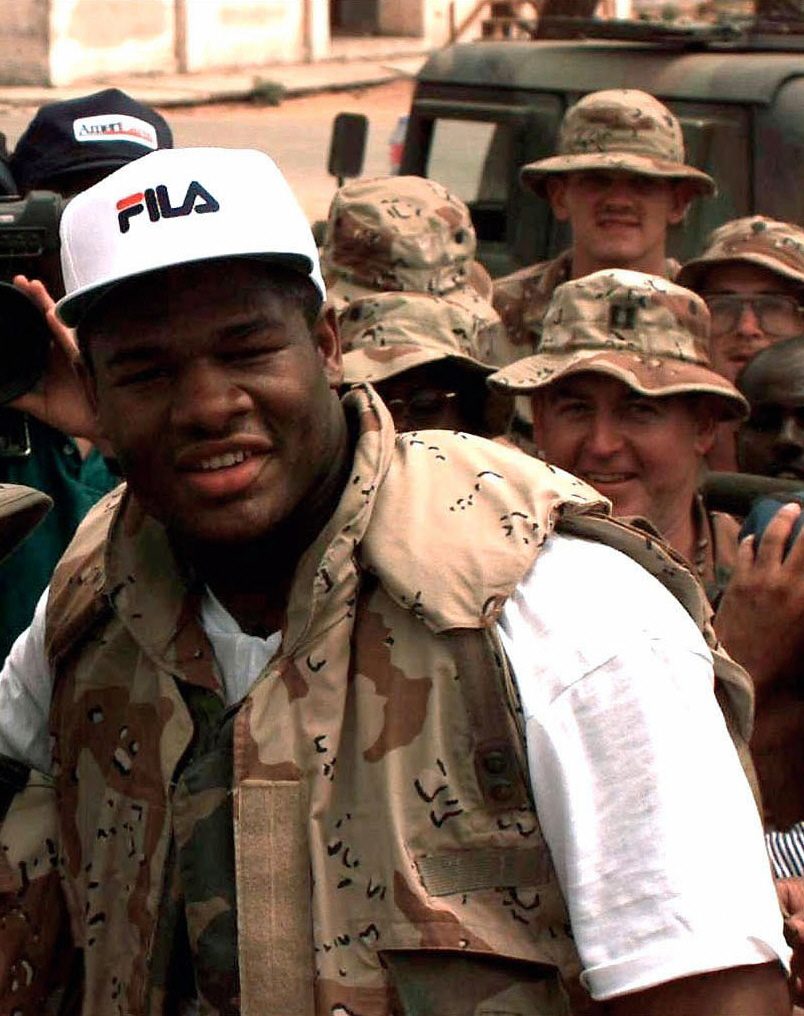
Photo: SPC Michael Halgren, U.S. Army / Department of Defense. Public domain.

Bowe: through the Gloves
Bowe stayed in the city. His family lost two of its own in ways the neighborhood knew well: his brother Henry died of AIDS, and his sister Brenda was stabbed to death in an attempted robbery.
He boxed as an amateur in the city and did it through the New York Golden Gloves, which he won four times: the 178-pound novice title in 1985, the 178-pound open in 1986, and the super heavyweight open in 1987 and 1988. In 1988 he went to Seoul and won a silver medal, losing the super heavyweight final to Lennox Lewis on a second-round stoppage that was disputed at the time.
On November 13, 1992, he beat Evander Holyfield on a unanimous decision for the undisputed heavyweight championship, flooring him in the eleventh round. Weeks later, in a dispute with the WBC over terms for a fight with Lewis, Bowe held a press conference in London and dropped the WBC belt into a trash can. He lost the other titles to Holyfield in their 1993 rematch, then in 1995 became the first man to stop Holyfield, and the first boxer to hold the titles of all four major sanctioning bodies at one time or another.
His 1996 fight with Andrew Golota at Madison Square Garden ended in a disqualification for repeated low blows and then a riot in the ring and the stands, one of the uglier nights the building has seen. In 1998 Bowe was convicted in the abduction of his estranged wife and their five children, during which he stabbed her. He was inducted into the International Boxing Hall of Fame in 2015.
The blocks
There is no tidy moral to draw from two men who came out of the same classroom. One left and was raised by a trainer in the mountains. One stayed and came up through the city's own amateur system. Both reached the top of the sport, and both did harm along the way that the record does not let anyone skip.
Pitkin Avenue is still the neighborhood's main street, and the old Loew's Pitkin movie palace still stands over it.
"We went to school together in the sixth grade in P.S. 396 (in Brownsville). I really didn't know him."
The Record is the editorial desk of Kings County. This piece describes serious crimes by its subjects as part of the factual record. Corrections and additions: write to the editors.
Sources
- Mike Tyson (birth, Bed-Stuy and Brownsville, Tryon, Stewart, D'Amato, guardianship, Junior Olympics, debut, Berbick, 1992 conviction): https://en.wikipedia.org/wiki/Mike_Tyson
- Cus D'Amato (Catskill Boxing Club, Camille Ewald, Patterson, Torres, death): https://en.wikipedia.org/wiki/Cus_D%27Amato
- Riddick Bowe (P.S. 396 quote, family, Golden Gloves, Seoul, Holyfield, WBC belt, Golota, 1998 conviction, Hall of Fame): https://en.wikipedia.org/wiki/Riddick_Bowe
- Loew's Pitkin Theatre, file page and description: https://commons.wikimedia.org/wiki/File:Loews_Pitkin_jeh.JPG
