
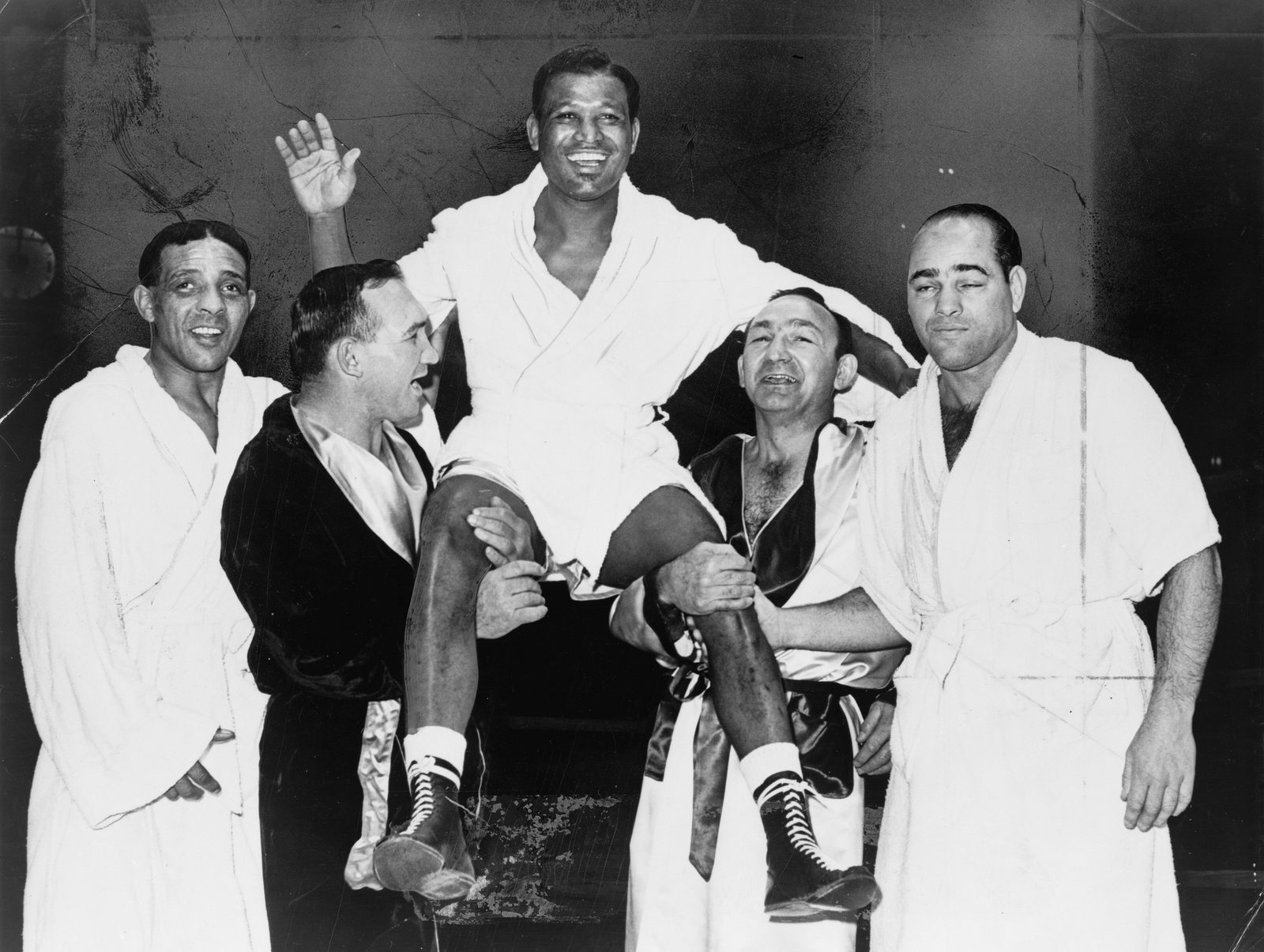

The work that made New York boxing famous rarely happened under the lights that sold tickets. It happened in rooms that closed early, on Eighth Avenue and in the side streets around the Garden, when the paying crowd had already gone home.
Stillman's at 919 Eighth Avenue was the most famous of those rooms, but it was not the only one. Fighters came in after jobs, or before them. The Garden got the nights. The gyms got the weeks. Writers who hung around the midtown rooms, A. J. Liebling among them, treated that gap as the real story: not the knockout in the papers, but the quiet rounds that made it possible.
Sugar Ray Robinson did his public work in places that still carry his name in Harlem. The private work, the part no one bought a ticket to see, lived in the same city, in rooms that smelled like leather and liniment, with no one in the seats. Joe Louis, when he was already a champion, still had to find a place to labor when Yankee Stadium was dark. The pattern is older than any one fighter.
What survives of those rooms is mostly stories and a few photographs: a Y.M.C.A. exhibition in 1920, a postcard of the Garden on Eighth Avenue, the names of gyms that are now addresses. The borough still has rooms like that, even if the street numbers have changed. The lights go out, the crowd goes home, and the work continues.