
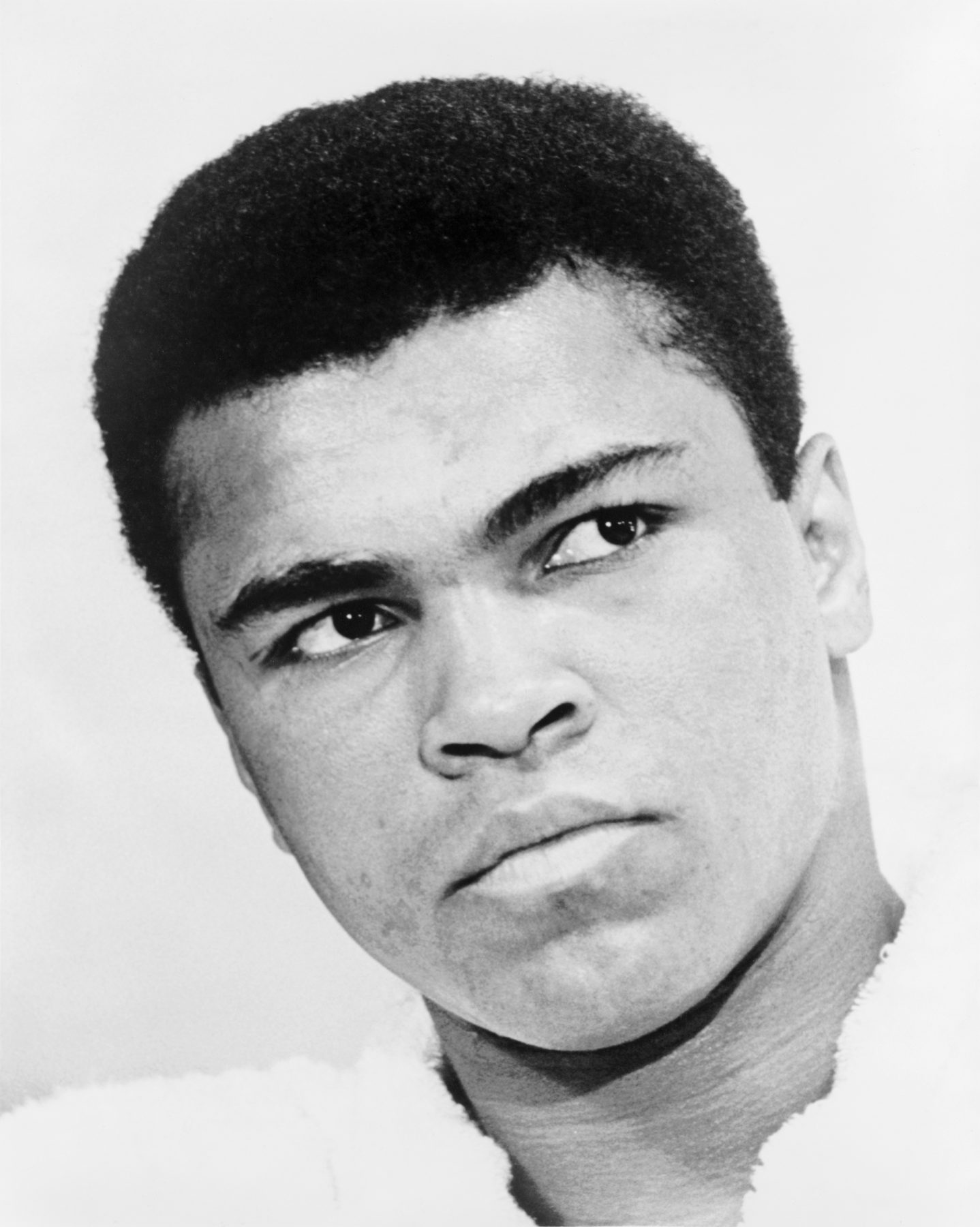

New York took Muhammad Ali's boxing license on the afternoon he refused induction in 1967. A federal judge in Manhattan, reading the Commission's own files, handed it back before the Supreme Court ever ruled.
The paperwork moved faster than the case. On April 28, 1967, at an induction center in Houston, Muhammad Ali stood where he was told to stand and did not step forward when his name was called. He was called three times. An officer explained that refusing was a felony that carried up to five years in prison and a $10,000 fine. His name was called once more, and he stayed where he was.
By the end of that same day the New York State Athletic Commission had suspended his license to box. The World Boxing Association took his title. Other commissions followed, the way commissions do when the biggest one in the country has already moved.
New York mattered for a plain reason. Ali had been licensed to box in the state since 1961, and New York was where his standing as heavyweight champion was recognized. When Albany's commission acted, the rest of the sport had cover.
The road to Houston
The dispute had been building for more than a year. Ali had failed the military's qualifying test in 1964 on writing and spelling. When the standards were lowered as the war in Vietnam widened, he was reclassified 1-A in February 1966. He said publicly that he would not serve, and asked to be recognized as a conscientious objector on the grounds of his faith as a member of the Nation of Islam. His local board in Louisville rejected the claim. He moved his legal residence to Houston early in 1967, where an appeal to be classified as a Muslim minister was denied 4–0 on February 20.
After the refusal came the indictment, on May 8, and the trial. On June 20, 1967, a federal jury in Houston, six men and six women, all of them white, convicted him of refusing induction. He was sentenced to five years. He stayed free on a $5,000 bond while the appeals ran, which meant he could travel and speak but could not work at the one job he was best at. His New York license, already suspended, simply expired on September 30, 1967, the date every license in the state expired each year.
The second application
Two years later he tried again. On September 22, 1969, Ali applied to renew his New York license. On October 14 the Commission denied it unanimously, calling his refusal and his felony conviction "detrimental to the best interests of boxing, or to the public interest, convenience or necessity." The chairman, Edwin B. Dooley, wrote him a letter two days later. It noted that Ali had no other criminal record and said the Commission would "be more than pleased to reconsider" if the conviction were ever reversed.
Ali sued in the Southern District of New York. His lawyer, Michael Meltsner, did something simple and devastating. He asked what the Commission had done with everyone else.
The answer was in the Commission's own records. It had granted, renewed or reinstated licenses in at least 244 cases involving applicants convicted of felonies, misdemeanors or military offenses involving moral turpitude. Fifteen of those were military offenses, including desertion and assault on an officer. Twenty-eight men had been licensed while on probation and twenty-six while on parole. The court filings named names. Jeff Merritt, a licensed heavyweight, had a robbery conviction. Joey Giardello had been licensed in 1965 after an assault conviction. Rocky Graziano, licensed in New York through the 1940s, had been court-martialed for going absent without leave and disobeying orders, and was given a dishonorable discharge.
Judge Mansfield's arithmetic
On September 14, 1970, District Judge Mansfield granted Ali a preliminary injunction. The opinion is short and does not raise its voice. It does not say the Commission had to license anyone. It says that if the state was going to deny a license for a criminal conviction, it could not do it to one man while licensing hundreds of others. The Commission's distinction between a deserter, whom it had licensed, and a man who refused to serve in the first place struck the judge as having no rational basis at all.
Ali's case in the criminal courts was still open. He was still a convicted felon on paper. The Garden did not wait. On December 7, 1970, eighty-four days after the ruling, he fought Oscar Bonavena at Madison Square Garden and stopped him in the 15th round. It was a flat performance until the end. Six weeks earlier he had already fought Jerry Quarry in Atlanta, under a license from the city's own athletic commission, granted on August 11, 1970.
On March 8, 1971, Ali and Joe Frazier fought in the Garden in what was billed as the Fight of the Century. The Supreme Court still had not ruled.
Clay v. United States
It ruled on June 28, 1971. In Clay v. United States, 403 U.S. 698, the Court reversed the conviction 8–0. Justice Thurgood Marshall did not take part, having worked on the case earlier at the Justice Department. The reversal turned on procedure: the government had not told the appeal board which of its reasons for denying the conscientious objector claim was the real one, and it had conceded that two of the three were invalid.
It is common to tell this story as one of vindication by the highest court in the land, and that is accurate as far as it goes. But in New York the decisive document came earlier and from a lower floor. It was a district court opinion built on a stack of license files, and it ends the way these opinions end, with an instruction to the lawyers to settle the order under Rule 65.
"The action of the Commission in denying him a license because of his refusal to serve in the Armed Forces while granting licenses to hundreds of other applicants convicted of other crimes and military offenses involving moral turpitude appears on its face to be an intentional, arbitrary and unreasonable discrimination against plaintiff."
The Record is the editorial desk of Kings County. This piece was drafted from court records and published histories. Corrections and additions: write to the editors.
Sources
- Muhammad Ali v. Division of State Athletic Commission, 316 F. Supp. 1246 (S.D.N.Y. 1970), full opinion: https://law.justia.com/cases/federal/district-courts/FSupp/316/1246/1951538/
- Same opinion, CourtListener: https://www.courtlistener.com/opinion/1951538/ali-v-division-of-state-athletic-commission-of-the-department-of-state/
- Clay v. United States, 403 U.S. 698 (1971), summary and background: https://en.wikipedia.org/wiki/Clay_v._United_States
- Muhammad Ali (Atlanta license, Quarry, Bonavena, Frazier dates): https://en.wikipedia.org/wiki/Muhammad_Ali
- New York Times archive, "Ali Starts Drive to Make Mountain Out of Bonavena," Nov. 6, 1970: https://www.nytimes.com/1970/11/06/archives/ali-starts-drive-to-make-mountain-out-of-bonavena.html
- Supreme Court opinion text: https://supreme.justia.com/cases/federal/us/403/698/